Implant Overdentures
Implant overdentures clip onto dental implants in the jawbone for a more secure, stable fit than a traditional denture.
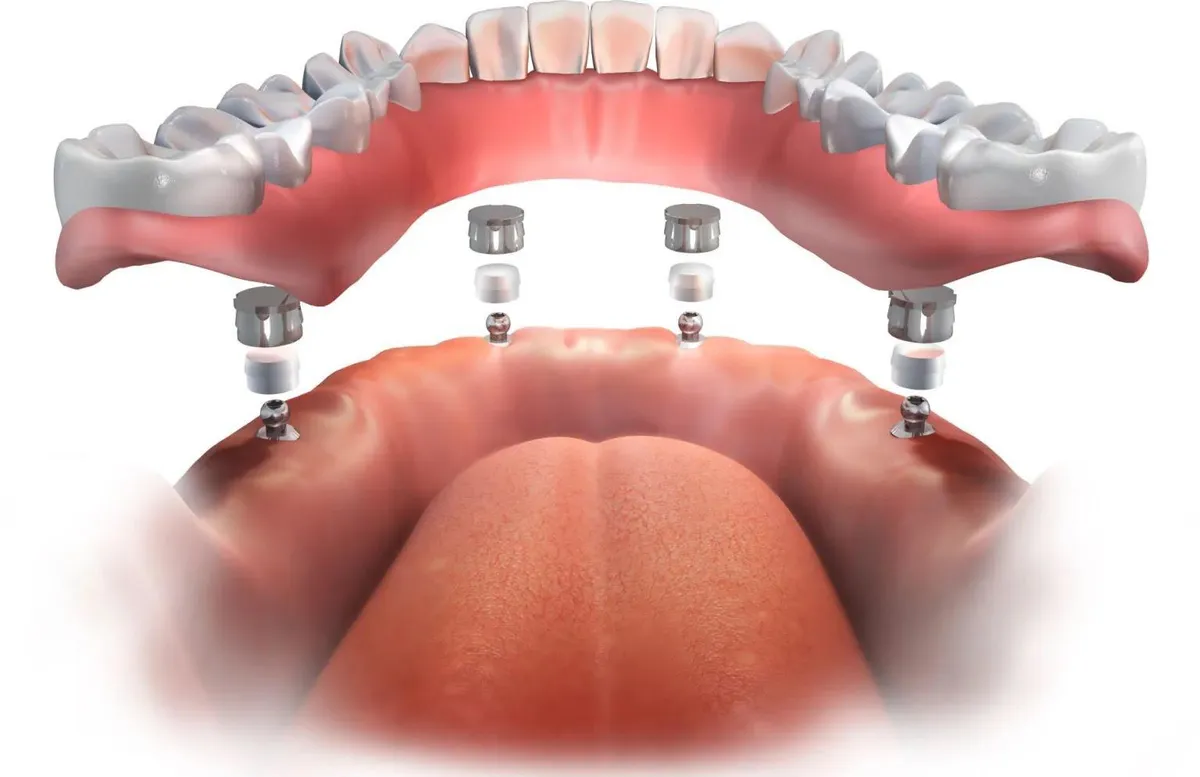

Implant overdentures are dentures that attach to dental implants placed in the jawbone, rather than resting on the gums alone. That combination is designed to give you the stability of implants with the convenience of a removable denture — you can still take them out to clean them, but day to day they sit far more securely than a conventional plate.
What are implant overdentures?
A conventional denture rests on the gum ridge and is held in place by suction and muscle control alone, which is part of why it can shift when you eat or speak. An implant overdenture instead clips onto two or more implants fixed in the jawbone, so the denture is anchored rather than floating. It’s a different mechanism for holding the denture in place, not a different material — the denture itself still looks and feels like a denture.
They’re generally considered for people who find a conventional denture loose or uncomfortable, or who have missing teeth affecting how they eat or speak, and who want a more stable alternative without the more extensive treatment that fixed implant-supported bridges involve.
How implants help
- Reduced movement. Anchoring to implants reduces the slipping and shifting that comes with a denture held in place by suction alone.
- Less pressure on the gums. Because load is shared with the implants, there’s typically less pressure directly on the gum ridge than with a conventional denture.
- Improved chewing. The added stability generally means a stronger, more even bite, which can make a wider range of foods more comfortable to eat.
- Jawbone stimulation. Dental implants stimulate the jawbone the way a natural tooth root does, which can help slow the bone loss that happens under a denture-only ridge over time.
Bar-retained and ball-retained overdentures
We offer two common designs, and which one suits you depends on your jaw anatomy and how many implants you have:
Bar-retained overdentures connect two or more implants with a thin metal bar, and the denture clips onto the bar as a single unit. This spreads load evenly across the implants and is a common choice when implants are close together.
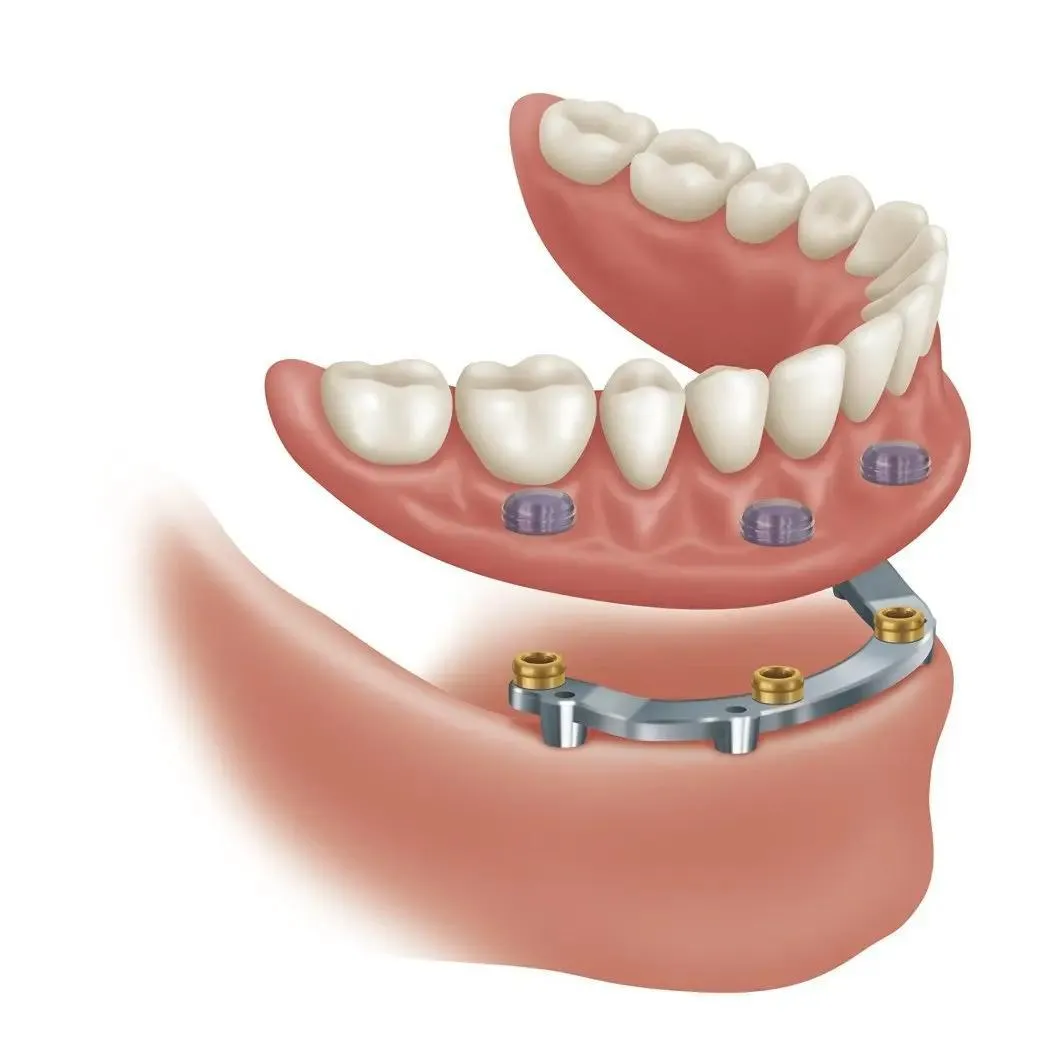
Ball-retained overdentures use ball-shaped attachments on each implant that click into matching sockets in the denture. Each implant works independently, which keeps the design simpler and can suit cases with fewer implants.
Is this an option worth discussing?
If a conventional denture has been uncomfortable or unreliable, or missing teeth are affecting your confidence day to day, implant overdentures are worth raising at a consultation. They involve minor surgery to place the implants, so they’re not the right fit for everyone — we’ll talk through whether your jawbone and general health make you a suitable candidate before recommending anything.
Caring for implant overdentures
Care is close to what you’d already do for a conventional denture — daily cleaning and taking them out overnight — with the addition of keeping the implant attachments themselves clean, since food and plaque can build up around them. We’ll walk you through the specific routine for your design at your fitting, and check the implants at your regular visits.
Book a consultation
If you’d like to know whether implant overdentures suit your case, call us or use the contact form to book a consultation.
You might also find this useful
Our other services
Our clinic provides a wide range of tailored treatments, each crafted to help you achieve the beautiful, confident smile you deserve.

Full Dentures
Restore your smile with expertly crafted full dentures for natural appearance and comfort.
Explore Full Dentures
Partial Dentures
Replace missing teeth with partial dentures designed to blend with your natural teeth.
Explore Partial Dentures
Denture Repairs & Relines
Fast and reliable repairs or relines to keep your dentures secure and functional.
Explore Denture Repairs & Relines
Emergency Denture Repairs
Quick solutions for unexpected issues to restore your smile with minimal downtime.
Explore Emergency Denture Repairs
Custom Mouthguards
Protect your teeth with custom-made mouthguards designed for safety and comfort.
Explore Custom Mouthguards
Mobile Denture Clinic
Convenient at-home care for aged care and nursing home residents.
Explore Mobile Denture Clinic